
You started this business to run it. Lately, it's been running you.
But here you are. Copying data between systems. Chasing the same follow-up emails. Manually building invoices one at a time. Doing the work that was supposed to be your team's job, or no one's job at all.
I fix that. Not with new software, not with a team of consultants, but with targeted automation built around the tools you already have, so you can get back to the work that actually grows your business.
Some people come to me with a specific bottleneck they're ready to fix. Others are just starting to explore what AI can actually do for a business like theirs. Either way: you're in the right place, and this is a safe place to start.
Less busy work. More real work.
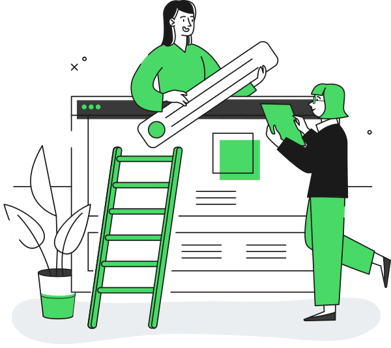
When your tools don't connect, the busy work lands
on you.
So you became the connection. Manually. Every day. Copying data between systems. Pulling the same report by hand. Building invoices one at a time. Doing work your tools should be handling.
Your tools are scattered tiles.
I connect them so the work flows without you.

I find the manual tasks eating your day and build the automation that handles them, using the tools you already own.
No new software. No new hires.
As your automation consultant, here's what I can take off your plate:
- Invoicing and billing
- Booking appointments
- Lead/customer follow-up
- Moving data between tools
- Routing urgent requests
- Reordering stock
- Expense & receipt tracking
- Onboarding new clients
- Pulling weekly reports
- Social postings
- Newsletters
- And more
The work that was supposed to be temporary
became permanent.
You became the system.
You're running the business and doing the admin work. One task became many. Now nothing moves without you.
With no time to fix it.
The same tasks eat your day.
You have no time left to fix
them, so they stay. And so does the bottleneck.
It's the process, not
the people.
You and your team aren't the reason work piles up. Your process is. That's what I fix.
What I actually do
I build small, targeted automations that connect the tools your business already runs on. I diagnose before I build. I keep a human in the loop on every workflow. I stay on after the build to monitor, fix, and tune.
I don't sell software. I don't replace teams. I don't promise to run your business for you. What I build is the connective tissue between the work that requires your judgment and the work a computer should have been handling all the time. Often, it's sprinkled with a little AI automagic.
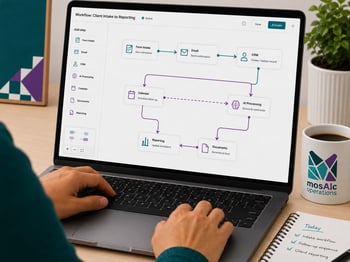
I sit between a complex system and the human trying to use it, and I make the system work for the human.
This is probably for you if...
Busy Work
You're a founder or owner of a small business spending meaningful time on work that doesn't require you.
Lost Revenue
You're losing leads, making billing errors, or scrambling to keep up with operational tasks.
AI Curious
You're curious about AI but not sure where to start or what it actually does for a business like yours.
Disconnected Tools
You're paying for software that doesn't talk to each other, and you're manually bridging the gap.
Ready for Growth
You want to grow, but the busy work keeps getting in the way.
You don't need to be technical. You don't need to understand automation. You just need to know that something is taking longer than it should.
Not sure where to start? Start here.
If something's been slowing you down, whether you can name it or not, the first step is a conversation. Book a free 30-minute discovery call. No pitch. No pressure. This is a safe place to start.
Questions I get asked before anyone books.
An automation is a connection between two or more tools that moves information or triggers an action without you doing it manually. When a client books an appointment and an invoice generates itself, that's an automation. When a new lead fills out a form and a follow-up email goes out in seconds, that's an automation. When a piece sells on Etsy and it's marked sold on Squarespace simultaneously, that's an automation. No robots. No new software. Just your existing tools, finally talking to each other. When AI is part of the solution, it usually handles the thinking work (e.g., reading a document, drafting a message, categorizing a request) while the automation handles the moving and routing. It runs quietly in the background. You stay in control.
Almost never. I build automations using the tools you already have: Google Workspace, Microsoft 365, HubSpot, Monday.com, Stripe, Slack, MailChimp, or something else entirely. Connecting the tools you already pay for is usually the answer. When AI is part of the solution, the cost of those tools is included in your Managed Operations subscription. No surprise bills, no separate subscriptions to manage. That's the AI automagic working quietly in the background.
No. The goal is to remove repetitive, manual tasks so your team can spend more time on work that needs judgment, care, and human attention. When that barrier is removed, teams don't shrink, they shift. They get to do the work they were actually hired for.
Yes. The discovery call is a chance to understand what is happening in your business, what is slowing things down, and whether I’m the right fit to help.